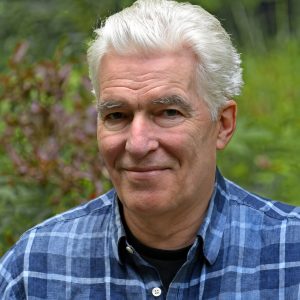
Interview With Author Rob Mullen
Tell us about yourself and how many books you have written.
Arriving in Manhattan with a brand-new biology degree, my goal was to make a living as a biological illustrator and become the Audubon of Bugs. After 16 years, literally on or within a block or two of Madison Avenue as a freelance advertising artist, I returned to my home state of Vermont with two brilliant daughters and dove headlong into wildlife art.
After six years on the national art show circuit, I felt more like a teamster than an artist, cut off from the wild that inspired me, so I planned a 300-mile, solo art expedition by canoe on the Missinaibi and Moose Rivers to the Arctic Ocean (I’d been an avid canoeist since age eight). Hearing of it at an art show reception three months before I was to leave, John Pitcher, one of the premier wildlife artists in the U.S., asked to join me.
John and I became fast friends, and that simple canoe trip grew into a series of more than 20 wilderness art expeditions with over 30 artists, photographers, and researchers participating. Soon after that initial expedition, I formed WREAF (Wilderness Expedition Art Fellowship) and partnered with the Smithsonian’s Arctic Studies Center at the National Museum of Natural History.
I now live on the western flanks of the Green Mountains, within a minute’s walk of a large beaver pond with my wife Bonnie, my 94-year-old father, our husky/border collie, Piper, and Luci (short for Lucifur), a stray cat we took in as a foster almost six years ago. She’s still here.
While I have written a smattering of magazine articles on expeditions and wildlife encounters, this is my first book.
What is the name of your latest book and what inspired it?
Boreal Wilderland – Art, Science, & Adventure in Earth’s Greatest Wilderness 35 Artists – 6 Natural History Experts – 20 Expeditions – 1 Enormous Ecosystem
That first art expedition on the Missinaibi River as it flowed north to James Bay was my inspiration. Due to John suffering a wrist injury, I continued alone from the last road crossing on the river. The prolonged solitude in such deep wilderness was an eye-opener. I had grown up in or near what I casually thought of as the NorthWoods and had even paddled in it for 20 years.
Upon returning home, inspired by insights and experiences on the river, I started reading. I learned that the largest wilderness on Earth was not some far-off, exotic jungle, but my familiar “NorthWoods.” And it was not only the largest wilderness on Earth, but the largest terrestrial ecosystem of any kind in the world. It was called the Boreal Forest. Critical for oxygen production, carbon balance, climate regulation, freshwater, wildlife, indigenous cultures, and even the productivity of coastal marine habitats, it was still largely intact, but under threat of burgeoning industrial development. And I had never heard of it.
Do you have any unusual writing habits?
I don’t think so. I approach writing similarly to how I do most paintings: I have an idea, amass reference material, and start painting – or writing – and change things as I go. In writing the first draft of this book, like several of my magazine articles, I simply wrote everything that I wanted to, including any digression or tangentially pertinent story that popped into my head. Then, with my publisher’s encouragement, I edited. I cut it down by a third. Then more. The final draft was almost exactly half of the first.
What authors, or books have influenced you?
First among a milling throng is Farley Mowat and Never Cry Wolf. I read it as a teenager, and far more than its defense of wolves (who in my mind needed no defense), what made an impression on me was the idea of extended, firsthand experience in the field and not sitting pat with assumptions from secondhand anecdotal accounts and armchair research.
More recently, three new books have helped to focus and organize thoughts about how trivialized and undervalued wildlife is in our culture that had been wandering around and growing in my head for years: Eat, Poop, Die by Joe Roman, PhD, and Eager and Crossings, by Ben Goldfarb
What are you working on now?
Most immediately, I am trying to catch up on painting commitments and projects around our house and property that were put off for two years while I worked on this current book. At the same time, I am learning about book promotion (see below).
What is your best method or website when it comes to promoting your books?
Being a first-timer and terribly behind on other commitments after the writing and editing were done (see above), I didn’t have any clear idea of what method or website to use for promotion, so I signed with a full-service literary PR company to handle it (Wildbound PR).
Do you have any advice for new authors?
It may seem funny, or even presumptuous, for a brand-new author like me to offer advice to new authors. However, for prospective authors:
1. Writing, editing, and getting to print may take longer than you think, or even what some prospective publishers will tell you. Possibly a lot longer.
2. If you can avoid diving into a wide-ranging, complex topic with over 30 other contributors with 350 images covering decades of work, do so. It would have been helpful to have gone through the publishing/editing/printing process at least once before taking on such an involved project as Boreal Wilderland for a first book.
3. Regarding 2 above: on the other hand, do what you have to do – you might not have a second book.
What is the best advice you have ever heard?
“Keep your eyes on what is in front of you and keep moving.” A Nunavik outfitter’s advice on crossing the Labrador Barrens in September.
What are you reading now?
The Man Who Mapped the Arctic – The Intrepid Life of George Back, Franklin’s Lieutenant, by Peter Steele.
What’s next for you as a writer?
Since I am a full-time wildlife artist, my next goals as a writer will likely differ from those of dedicated writers. That said, aside from upcoming promotional events, I do have a broad idea for a contrasting book, one that examines the art and ecology of the beaver pond behind our house rather than a global forest (Preston Pond, the beaver pond, figures often in my current boreal forest book).
If you were going to be stranded on a desert island and allowed to take 3 or 4 books with you what books would you bring?
1. Practically, an obvious choice would be a good survival manual with information on shelter, water, signaling, edible plants, fire starting, and first aid tailored to a marine environment.
2. Inspirationally, The Swiss Family Robinson and Robinson Crusoe (what is it with Robinsons and getting stranded on desert islands?).
3&4: Creatively, two thick, blank sketchbooks for artwork and a journal that I could publish after I get rescued (do I get a pencil? Maybe several boxes of them? I could use charcoal from my fires, but it smudges badly).
Author Websites and Profiles
Rob Mullen’s Social Media Links
Author Interview Series
To discover a new author, check out our Featured Authors page. We have some of the best authors around. They are just waiting for you to discover them. If you enjoyed this writer’s interview feel free to share it using the buttons below. Sharing is caring!
If you are an author and want to be interviewed just fill out out Author Interview page. After submitting we will send it out in our newsletters and social media channels that are filled with readers looking to discover new books to read.
If you are looking for a new book to read check out our Featured Books Page.