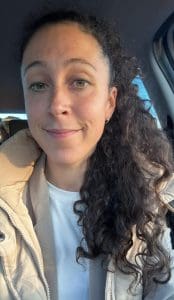
Interview With Author Anita Scaramuzzi
Tell us about yourself and how many books you have written.
I’m an Italian educator, psychologist, and children’s author who loves creating gentle, meaningful stories for young learners. I’ve spent many years working with children and families, helping kids explore emotions, imagination, and communication through art, reflective moments, and playful activities.
I have written several books and educational materials in Italian, and I’m now expanding my work to an international audience.
My current project is a picture book series called “Creatures of Soul and Wonder” — a collection of stories inspired by children’s inner world, their emotions, fears, hopes, and the quiet magic that lives inside them.
Each book gently blends imagination with emotional exploration: small creatures, symbolic animals, and simple prompts guide children to express what they feel, to notice beauty, and to make sense of their experiences in a safe and creative way.
This series grew out of my professional work and my author’s note: the belief that children see the world with an honesty and depth that adults often forget — and that stories can help them give shape to that inner universe.
The Bat and the Night is the first title in English from this series, and my way of inviting young readers to explore emotions through drawing, reflection, and nighttime wonder.
What is the name of your latest book and what inspired it?
My latest book is The Bat and the Night, the first title in my series Creatures of Soul and Wonder.
It’s a gentle picture book that invites young children to explore emotions, imagination, and self-expression through simple drawing prompts and quiet nighttime imagery.
The inspiration came from my work as an educator and psychologist. I often see how children express their deepest feelings through symbols—shadows, animals, colors, small stories they invent while drawing or daydreaming. The bat, in particular, felt like a perfect companion: a tiny, misunderstood creature that moves through darkness with sensitivity, curiosity, and surprising courage.
I wanted to create a book that helps children look into their own “night”—their fears, questions, hopes—and discover that there is beauty, softness, and creativity there too.
The prompts were inspired by real conversations with children, and by my belief that storytelling and art can give shape to emotions that words alone cannot always capture.
The Bat and the Night is my way of offering children a safe, magical space where imagination becomes a tool for understanding themselves.
Do you have any unusual writing habits?
I think my most unusual writing habit is that many of my stories begin long before I actually sit down to write.
Because of my work with children, ideas often come to me while I’m observing their drawings, listening to their questions, or noticing the small emotions that appear in everyday moments. I always carry a tiny notebook where I jot down a word, an image, or something a child says that feels meaningful. Those little fragments often become the heart of a story.
Another unusual habit is that I sketch before I write.
Even though I’m not an illustrator, drawing a creature or a symbolic shape helps me understand the emotional tone of the book. It’s my way of stepping into the child’s imaginative space before choosing the words.
And I have to admit: my daughters and even our little dog Lilo have helped me more than once.
Sometimes a simple question from them, a drawing they leave on the table, or the quiet way Lilo curls up beside us gives me the exact feeling or image I was searching for. They’re often the first sparks behind my stories.
What authors, or books have influenced you?
One of my earliest and strongest influences is Aesop.
I grew up with his fables, and I still love the way a very small story — a simple scene, a tiny creature, a quick moral — can open a window into emotions, choices, and inner growth. That sense of clarity and symbolic storytelling has stayed with me.
I’m also deeply influenced by children themselves.
The way they draw, imagine, question, and make sense of the world often teaches me more than any book. A single sentence from a child, a drawing full of emotion, or even a moment of silence between thoughts can inspire an entire story.
And because I’m an Italian writer, I’m naturally shaped by the warm, simple storytelling traditions I grew up with — stories where nature, small creatures, and quiet moments often carry deeper meaning.
My own daughters and the children I work with every day remain my biggest source of inspiration. They remind me that imagination, honesty, and emotional truth are the heart of every good children’s book.
What are you working on now?
Right now, I’m continuing to develop my picture book series “Creatures of Soul and Wonder.”
Each book in the series explores a different emotion or inner landscape through symbolic little creatures, simple prompts, and gentle, open-ended reflections designed for young children.
I’m currently working on the next two titles, which focus on themes like bravery, comfort, curiosity, and belonging — emotions that often appear in early childhood but can be hard for kids to express with words alone.
My goal is to create books that feel soft, safe, and imaginative, giving children space to draw, think, and communicate their feelings in their own unique way.
I’m also developing new activities and guided prompts to accompany the series, so families and educators can use the books during calm-down moments, SEL routines, or creative workshops.
It’s a slow, thoughtful process — but one I deeply enjoy, because each story grows from real experiences with children and from the small wonders I see in their everyday emotional world.
What is your best method or website when it comes to promoting your books?
As an author who works mainly with young children and families, I’ve learned that the best kind of self-promotion is the one that feels natural and connected to the purpose of my books.
I don’t rely on large social media platforms — instead, I focus on small, meaningful spaces where parents, educators, and readers look for real resources.
Websites like AwesomeGang and communities for teachers, homeschool families, and early-childhood educators have been genuinely helpful. Sharing my book in places where people already care about emotional learning and creative activities makes the connection feel honest and useful.
For me, the most effective method is always sharing the book where it can truly serve someone. When promotion stays aligned with the heart of the work, readers respond to that authenticity.
Do you have any advice for new authors?
My best advice is to stay close to the heart of why you write.
It’s easy to get overwhelmed by publishing, marketing, or comparisons with others — but every book begins with a small, honest spark. Hold onto that spark.
Write consistently, even if it’s only a few lines a day.
Listen to the world around you — children, families, nature, everyday moments — because stories often start in the quietest places. And don’t be afraid to revise: shaping a book is a slow process, and that’s part of its beauty.
Also, accept that not everything has to be perfect from the beginning.
Every book teaches you something, every project helps you grow, and every reader connection is meaningful, even if small.
Most of all, keep going.
If you write with sincerity and purpose, the right readers will eventually find you.
What is the best advice you have ever heard?
The best advice I’ve ever heard is: “Write from truth, not from fear.”
It applies to everything — writing, teaching, and even daily life.
Fear makes you shrink, second-guess, and try to please everyone.
Truth, instead, guides you toward what matters, even when the path is small or quiet.
Whenever I feel uncertain about a story or a project, I return to that idea.
If the work is honest, sincere, and rooted in something real — a feeling, a moment, a child’s question — then it will eventually find its readers.
Truth has a way of reaching the right people.
What are you reading now?
Right now, I’m reading a mix of books connected to early childhood, creativity, and emotional learning — the areas that inspire most of my work. I’m spending time with a wonderful collection of picture books that explore feelings in simple, meaningful ways, and I often revisit classic fables by Aesop, which continue to remind me how powerful a small story can be.
I’m also reading a few nonfiction books about emotional development and storytelling, because they help me grow as both an educator and an author. I love books that blend psychology, childhood observation, and imagination — they always spark new ideas for my own writing.
What’s next for you as a writer?
My next steps are all connected to expanding the world of “Creatures of Soul and Wonder.”
I’m working on new picture books that explore different emotions and inner experiences through gentle imagery, symbolic creatures, and simple prompts that invite children to draw, imagine, and reflect.
I’m also developing companion materials for families and educators — small activities, creative exercises, and guidance that can be used during calm-down moments, SEL routines, or quiet classroom time.
My goal is to offer a collection of resources that support emotional learning in a warm, accessible way.
As a writer, I hope to continue growing in both languages — Italian and English — and to reach more children and families around the world.
There are many more creatures to meet and many more stories waiting to be written.
If you were going to be stranded on a desert island and allowed to take 3 or 4 books with you what books would you bring?
If I were stranded on a desert island, I would choose books that keep both my imagination and my spirit alive.
I’d bring a collection of Aesop’s fables, because their small stories carry timeless wisdom, and they remind me that even the tiniest creature can reveal something true about life.
I would also take one of the dialogues of Plato — their calm, searching conversations about truth, courage, and the nature of the good would be the kind of company one needs in solitude.
I’d add “Thus Spoke Zarathustra”, a book that challenges, provokes, and invites deep reflection. Its poetic, powerful voice feels like a companion on any journey, especially one filled with silence and vast horizons.
And finally, I would bring a blank notebook.
Stories, thoughts, and questions always rise up when life grows quiet — and writing would be my way of staying connected to the world within me, even far from everything else.
Author Websites and Profiles
Anita Scaramuzzi Amazon Profile
Author Interview Series
To discover a new author, check out our Featured Authors page. We have some of the best authors around. They are just waiting for you to discover them. If you enjoyed this writer’s interview feel free to share it using the buttons below. Sharing is caring!
If you are an author and want to be interviewed just fill out out Author Interview page. After submitting we will send it out in our newsletters and social media channels that are filled with readers looking to discover new books to read.
If you are looking for a new book to read check out our Featured Books Page.