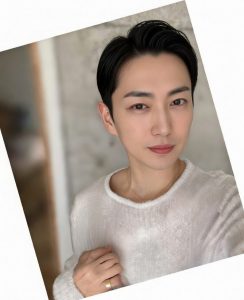
Interview With Author Gabrishas キエーザろーひ
Tell us about yourself and how many books you have written.
I’m a writer with a deep interest in martial arts history,
Japanese sword culture, and the question of what it truly means
to master something — not just perform it skillfully, but
understand it at a level you can barely put into words.
Chronicles of the Old Sword Saint is my debut series. The first
volume, The Boy Who Learned the Sword, is now available on
Amazon Kindle. I release new chapters on a weekly schedule,
which keeps me close to the readers and honest about the work.
Outside of writing, I enjoy cooking, long walks, and reading
history — particularly the kind that focuses on how ordinary
people lived, not just the famous ones. I believe the most
interesting characters are competent, quiet, and slightly
oblivious to how remarkable they are.
What is the name of your latest book and what inspired it?
The book is called An Old Swordsman Got Isekai’d. Somehow He
Became the Greatest Blade in the Land. — Volume One: The Boy
Who Learned the Sword.
The inspiration came from a frustration with a pattern I kept
seeing in isekai fiction: the protagonist arrives in a new world,
immediately receives enormous power, and spends the story
proving it to everyone around them. I wanted to write the
opposite.
What if the protagonist already had everything — not a cheat
ability, but fifty years of genuine mastery — and the story
was about what that mastery actually looks like when applied
quietly and without ego? What does real strength feel like from
the inside, especially when the person carrying it still thinks
they have a long way to go?
The main character, Kirishima Sogen, dies as a 52-year-old
sword master in Edo-period Japan and is reincarnated into a
medieval fantasy world. He carries all his memories and all
his skill — but in an infant’s body, in a world where the sword
works differently. He doesn’t announce himself. He just starts
again, from the beginning, and does the work.
That image — a master starting over, still unsatisfied,
watching younger people catch up and quietly being proud of
them — felt like something worth writing.
Do you have any unusual writing habits?
I research before I write, which sounds ordinary, but I take
it further than most people probably should. Before writing
a scene involving wild boar behavior, I spent two hours reading
wildlife ecology papers. Before writing a medieval town, I
checked what roads actually looked like in 13th-century Europe
(dirt, mostly — not cobblestone, despite what films suggest).
I find that small accurate details give the world a solidity
that readers feel even if they can’t identify exactly why. And
when I get something wrong, I want it to be from ignorance,
not laziness.
I also write with the English translation in mind from the
start. The series is written in Japanese first, then translated
into English — so every scene has to work in both languages,
which shapes how I write dialogue in particular.
What authors, or books have influenced you?
For the core philosophy of the series — the idea of mastery
as something felt rather than explained — I keep returning to
books on Zen and the Japanese martial arts. Eugen Herrigel’s
Zen in the Art of Archery shaped how I think about what the
protagonist is trying to pass on to his students.
In fiction, Ursula K. Le Guin’s approach to quiet protagonists
has been a constant reference. She wrote powerful characters
who didn’t need to perform their power — and that restraint
is something I try to carry into every scene.
For isekai and Japanese light novel structure, I’ve read widely
but tried to write against the grain of what’s most common —
specifically the tendency toward spectacle over interiority.
The protagonist of this series spends a lot of time thinking,
observing, and feeling things he can’t put into words. That’s
unusual for the genre, and intentional.
What are you working on now?
I’m currently deep in Volume One, releasing new chapters every
Monday. The story has just reached a significant turning point:
the protagonist is now 40 years old, his former students have
become knights, court mages, and intelligence officers — and
he’s still running his small dojo, convinced he hasn’t figured
it out yet.
The next arc involves him being pulled, reluctantly, into the
world of the Royal Knight Order — and what happens when a quiet
man with no interest in recognition is suddenly visible to
people with very strong opinions about rank and status.
I’m also beginning to outline Volume Two, which I expect to
shift the geographic scope considerably.
What is your best method or website when it comes to promoting your books?
Honestly, I’m still learning. What I’ve found so far is that
consistent output matters more than any single promotional
push. The weekly chapter release schedule has been the most
effective thing I’ve done — it gives readers a reason to come
back, and it keeps the book alive in their attention between
volumes.
For discovery, I’m focusing on sites that reach readers who
genuinely love the genres — fantasy, isekai, action adventure —
rather than broad audiences who might not connect with the
material. AwesomeGang is part of that approach.
I’d rather have two hundred readers who love the book than two
thousand who shrug at it.
Do you have any advice for new authors?
Write the book that only you could write. Not the book you
think will sell, not the book that fits the most popular tropes
— the book where your specific obsessions, your specific way of
seeing the world, your specific frustrations with every other
book you’ve read on the subject, are all on the page.
Readers can feel the difference between a writer who is
executing a formula and a writer who genuinely couldn’t stop
themselves from writing this particular story. The second one
is always more interesting, even when it’s rougher.
Also: research. The details you get right, quietly, without
calling attention to them — those are what make a world feel
real.
What is the best advice you have ever heard?
“The expert in anything was once a beginner.”
It sounds simple. But when you’re in the middle of a difficult
project and everything feels wrong, the reminder that the
distance between where you are and where you want to be is
crossable — not by talent, but by continued work — is the
only thing that keeps you moving.
My protagonist lives this advice. He’s been crossing that
distance for fifty years and still doesn’t think he’s arrived.
I find that more inspiring than any story about someone who
was simply born gifted.
What are you reading now?
I’m currently reading a history of medieval European guild
systems — research for background details in the series. I’m
also re-reading sections of The Book of Five Rings by Miyamoto
Musashi, which I return to regularly when I need to recalibrate
how the protagonist thinks about conflict and stillness.
For fiction, I’ve been catching up on some contemporary fantasy
that I’d missed — trying to stay aware of what’s happening in
the genre while writing something that deliberately pushes
against certain conventions of it.
What’s next for you as a writer?
Finishing Volume One is the immediate goal — I expect it to
run another eight to ten chapters beyond where we are now.
After that, Volume Two will expand the world significantly.
The protagonist’s reputation, which has been contained to a
single kingdom so far, will begin to travel — and the
consequences of that will drive the next arc.
Longer term, I’m interested in writing something outside the
isekai genre entirely. The themes I care about — mastery,
transmission of knowledge, the gap between what you know and
what you can say — don’t require a fantasy setting. But that’s
a project for after this series finds its footing.
If you were going to be stranded on a desert island and allowed to take 3 or 4 books with you what books would you bring?
1. The Complete Works of Montaigne — because he invented the
essay as a form of thinking out loud, and I could spend
years in conversation with him.
2. Zen in the Art of Archery by Eugen Herrigel — a short book
about something that takes a lifetime to understand. Perfect
for an island.
3. The Lord of the Rings by Tolkien — because I would want
something long, deeply imagined, and worth re-reading.
It invented the idea that a secondary world could have the
weight of a real one.
4. A blank journal — if that counts. I’d rather write than
run out of things to read.
Author Websites and Profiles
Gabrishas キエーザろーひ Amazon Profile
Author Interview Series
To discover a new author, check out our Featured Authors page. We have some of the best authors around. They are just waiting for you to discover them. If you enjoyed this writer’s interview feel free to share it using the buttons below. Sharing is caring!
If you are an author and want to be interviewed just fill out out Author Interview page. After submitting we will send it out in our newsletters and social media channels that are filled with readers looking to discover new books to read.
If you are looking for a new book to read check out our Featured Books Page.