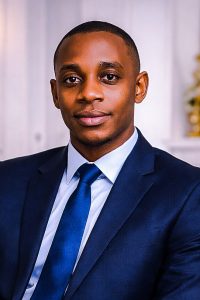
Interview With Author Peter Oloche David
Tell us about yourself and how many books you have written.
I am a researcher and writer focused on complex global challenges at the intersection of science, history, and innovation. My work is driven by a deep curiosity about how humanity confronts its most persistent problems, and how emerging technologies can accelerate meaningful solutions.
The Immortal Malady: A Global History of Cancer and the Science of Its Defeat is my first full-length book. However, it is built upon years of independent research, analytical writing, and published research works under my name. My academic background and research experience shaped the foundation of this project, allowing me to approach cancer not only as a medical condition, but as a historical, scientific, economic, and technological phenomenon.
While this is my debut book, it represents an extensive and carefully constructed body of work exceeding 100,000 words, drawing from global oncology history, molecular biology, public health systems, and the emerging role of artificial intelligence in cancer research and therapy development.
I see this book as the beginning of a larger body of scholarly and policy-oriented writing. My goal is to contribute meaningfully to conversations that bridge academia, innovation, and public understanding.
What is the name of your latest book and what inspired it?
My latest book is titled The Immortal Malady: A Global History of Cancer and the Science of Its Defeat.
The inspiration behind the book came from a simple but unsettling question: Why, despite centuries of scientific advancement, has cancer remained one of humanity’s most persistent and formidable diseases? From ancient medical records to modern genomic laboratories, cancer has continuously evolved alongside human civilization. I wanted to understand not only its biology, but its history, its economic impact, its influence on global health systems, and its profound human cost.
What further inspired me was the accelerating convergence of artificial intelligence, biotechnology, and precision medicine. We are living in a moment where machine learning can analyze complex tumor data in unprecedented ways, where immunotherapy is redefining treatment pathways, and where early detection technologies are becoming increasingly sophisticated. It felt necessary to document this turning point in oncology to examine how we arrived here and to explore whether we may finally be approaching a transformative breakthrough.
Ultimately, the book was inspired by both urgency and hope: urgency because cancer continues to affect millions of families worldwide, and hope because science and innovation may now be aligning in ways that were unimaginable even a decade ago.
Do you have any unusual writing habits?
Yes! I don’t write like a traditional “start at page one and move forward” author.
I tend to write like a researcher assembling a puzzle. One day I’m exploring ancient Egyptian medical texts, the next I’m drafting sections on immunotherapy or AI-driven drug discovery. I let the ideas speak to each other before I force them into order.
I also talk to myself while writing complex sections, especially when translating dense scientific material into accessible language. If someone walked past my desk, they might hear me debating a paragraph out loud.
And perhaps most unusually, I don’t stop when I’m “on a roll.” If a chapter is flowing at midnight, I’ll continue until the argument feels intellectually settled.
For me, writing isn’t just output – it’s immersion.
What authors, or books have influenced you?
Several authors have significantly influenced both my thinking and my writing style.
Siddhartha Mukherjee, particularly through his book The Emperor of All Maladies, deeply shaped my understanding of how to write about cancer not just as a disease, but as a historical force. His ability to merge narrative storytelling with rigorous science demonstrated that complex medical history can be both scholarly and profoundly human.
Yuval Noah Harari also influenced me, especially through Sapiens: A Brief History of Humankind. His sweeping, interdisciplinary approach to history encouraged me to think beyond isolated events and examine long-term systemic patterns, something I applied when exploring cancer across civilizations and scientific eras.
From a scientific and technological perspective, Walter Isaacson, particularly in The Code Breaker, influenced how I approached the intersection of biotechnology, innovation, and human ambition. His work reinforced the importance of framing scientific revolutions within ethical and societal contexts.
Collectively, these authors shaped my desire to write analytically yet accessibly to bridge rigorous research with narrative clarity, and to treat science not just as data, but as part of the broader human story.
What are you working on now?
Currently, I am expanding the research behind The Immortal Malady into new interdisciplinary directions. I am exploring how emerging technologies, particularly artificial intelligence, precision medicine, and advanced diagnostics are transforming the way we understand, detect, and treat cancer. My focus is not just on the science itself, but on how innovations intersect with public health systems, global policy, and ethical considerations.
In parallel, I am preparing a series of research articles and essays that distill these insights for broader audiences, connecting historical perspectives with cutting-edge developments. Ultimately, my goal is to build a bridge between rigorous academic research and practical, actionable knowledge that can inform both the scientific community and the public.
This work continues to fuel my writing, and I see it as the natural next step in exploring humanity’s ongoing battle with one of our most persistent diseases.
What is your best method or website when it comes to promoting your books?
As a first-time book author with a research-focused audience, I prioritize platforms and methods that combine credibility with reach.
One of my most effective methods is leveraging professional and academic networks. I use platforms like ResearchGate, LinkedIn, and relevant academic forums to connect with scholars, medical professionals, and policy influencers who are genuinely interested in my field. Sharing research insights, excerpts, and data visualizations from The Immortal Malady generates meaningful engagement.
For public promotion, I focus on author websites and specialized media outlets. Having a dedicated website allows me to present the book alongside my research, offer downloadable abstracts, and host interviews or blog posts. I also collaborate with science-focused media platforms and book review blogs that reach readers interested in medical history, technology, and public health.
Finally, I find thoughtful social media promotion especially on Facebook and X for research communities, LinkedIn for professional audiences, and targeted newsletters can help bridge the gap between academic research and general readership.
The strategy I prefer combines credibility, educational value, and direct engagement, rather than mass advertising, which aligns with my work’s depth and focus.
Do you have any advice for new authors?
Yes I do! My advice for new authors like myself is to focus on rigor, persistence, and clarity.
1. Rigor: Whether writing fiction, non-fiction, or research-based work, ensure your content is accurate and well-supported. For research-heavy books like mine, this meant meticulously reviewing historical records, scientific studies, and emerging research to build a credible foundation.
2. Persistence: Writing a book is a marathon, not a sprint. There will be moments of doubt, writer’s block, or overwhelming complexity. Commit to a routine and break the work into manageable sections, even small progress each day adds up.
3. Clarity: No matter how complex your subject, aim to make it accessible. Readers appreciate authors who can explain difficult ideas without oversimplifying. Storytelling, analogies, and structured organization help bridge gaps between expertise and general readership.
Finally, engage with your audience early. Feedback from peers, mentors, or even social media communities can help refine your voice and ensure your work resonates. Every book is both a personal journey and a conversation with readers.
What is the best advice you have ever heard?
The best advice I’ve ever heard is from Chinwe Achebe: “Focus on the questions, not the answers.”
It may sound simple, but it has shaped both my research and writing. By prioritizing the right questions, I’m able to explore deeper insights, challenge assumptions, and uncover connections that might otherwise be missed. This approach drove the creation of The Immortal Malady, where I asked not only “How do we treat cancer?” but also “Why has it persisted for centuries?” and “What systemic, technological, and social factors must change to finally defeat it?”
Focusing on the questions keeps curiosity alive, encourages continuous learning, and turns every challenge into an opportunity for discovery, whether in research, writing, or life.
What are you reading now?
Currently, I am reading a mix of scientific, historical, and policy-oriented works that complement my ongoing research. On the scientific side, I’m exploring recent publications on AI in oncology and precision medicine, which provide insights into how emerging technologies are shaping cancer detection and treatment.
At the same time, I’m revisiting historical works on medicine and public health to better understand how societies have responded to major diseases across centuries. I also read articles on bioethics, global health policy, and science communication, as these areas help me frame research findings in a way that is relevant and accessible to both scholars and the general public.
This combination keeps me grounded in both historical context and cutting-edge innovation, which directly informs my writing and research.
What’s next for you as a writer?
As a writer, my next step is to build on the foundation of The Immortal Malady by exploring new ways to connect research, storytelling, and public engagement. I plan to continue investigating the intersection of science, technology, and society, particularly how innovations like artificial intelligence, biotechnology, and data-driven health systems are transforming our understanding of disease and prevention.
I am also working on a series of essays and research articles that distill complex scientific insights for broader audiences, bridging academic scholarship with practical knowledge. Beyond writing, I hope to engage more with media, public talks, and interviews to share these insights with readers, policymakers, and fellow researchers worldwide.
Ultimately, my goal as a writer is to illuminate complex problems, inspire informed conversations, and contribute to meaningful change in how we understand and respond to global health challenges.
If you were going to be stranded on a desert island and allowed to take 3 or 4 books with you what books would you bring?
If I were stranded on a desert island and could bring only 3–4 books, I would choose works that inspire both reflection and knowledge:
1. Sapiens: A Brief History of Humankind by Yuval Noah Harari for its sweeping perspective on human history and the forces that shape our societies.
2. The Emperor of All Maladies by Siddhartha Mukherjee, a deeply human exploration of one of humanity’s greatest medical challenges.
3. The Code Breaker by Walter Isaacson, for insight into the ethical, technological, and personal dimensions of scientific breakthroughs.
Optionally, a classic work of literature, such as Meditations, to provide reflection, resilience, and perspective in solitude.
These selections combine history, science, and philosophy areas that challenge the mind, spark curiosity, and offer enduring insight even in isolation.
Author Websites and Profiles
Peter Oloche David’s Social Media Links
Author Interview Series
To discover a new author, check out our Featured Authors page. We have some of the best authors around. They are just waiting for you to discover them. If you enjoyed this writer’s interview feel free to share it using the buttons below. Sharing is caring!
If you are an author and want to be interviewed just fill out out Author Interview page. After submitting we will send it out in our newsletters and social media channels that are filled with readers looking to discover new books to read.
If you are looking for a new book to read check out our Featured Books Page.