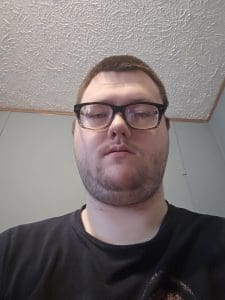
Interview With Author Seth A. Horn
Tell us about yourself and how many books you have written.
My name is Seth A. Horn. I'm an author, theologian, and inventor based in Wichita, Kansas, and I'm a self-identified autistic person. I've written two books under my own name — The ANCOR Method, a nervous system self-regulation guide, and my latest, Late-Identified Neurodivergence: Without the Redemption Arc. I also have forthcoming titles including Support That Doesn't Look Like Help and The Borrowed Axis, with more in development beyond those.
What is the name of your latest book and what inspired it?
My latest book is Late-Identified Neurodivergence: Without the Redemption Arc. The inspiration was pretty simple and pretty personal — I was identified late, and every resource I found was either written for parents of children, or it had this built-in narrative arc where you struggle, you discover yourself, and then everything gets better. That redemption arc felt dishonest to me. The reality is messier than that. You can have real insight into who you are and still be navigating a world that wasn't built for you. The grief doesn't disappear. The masking doesn't just stop. I wanted to write the book that told the truth about that experience without wrapping it in a bow.
Do you have any unusual writing habits?
I dictate almost everything into my phone using speech-to-text. I'm not sitting at a desk with a cup of coffee and a blinking cursor — I'm talking. That's how my brain works best. The ideas come out faster than my hands can capture them, so I stopped fighting that and just started speaking my books into existence. A lot of those ideas don't even originate while I'm awake — I dream prolifically, and my books have a way of working themselves out while I'm asleep. I'll wake up with a plot problem solved, a character's voice suddenly clear, a structural idea I didn't have the night before. And I'm rarely working on just one thing — at any given time I have multiple books in progress across completely different genres, under different names, in different voices. A psychological thriller, a philosophical humor novel, literary fiction, theology. Most writers would find that chaotic. For me it's just how the brain runs. It's an unusual workflow, but it suits a neurodivergent mind pretty well — you work with your nervous system, not against it.
What authors, or books have influenced you?
My influences are all over the map, which probably says something about how my brain works. On the philosophical side, Marcus Aurelius and Plato shaped the way I think about meaning, systems, and what it means to live deliberately. On the fiction side, Dean Koontz taught me how to build dread and propulsion, and Rick Riordan showed me how mythology can be made viscerally alive for a modern reader. And then there's Tesla and Twain — both of whom I admire deeply enough that I'm writing a novel about their friendship.
But honestly, my biggest influence might just be the fact that I've been a voracious reader my entire life. I remember reading the encyclopedia — every single volume — and dictionaries, when I was seven years old. Not because anyone told me to. Just because I needed to know things. That hunger never left.
I also taught myself neuroscience, which sounds unusual but isn't surprising if you understand how a neurodivergent mind works. When something matters to you, you go all the way in. That self-directed deep dive ended up shaping my nonfiction work significantly.
What are you working on now?
I'm always working on multiple things at once — that's just how my brain operates. Under my own name I have two nonfiction titles forthcoming, Support That Doesn't Look Like Help and The Borrowed Axis, which continue the territory I've been exploring around neurodivergence and human experience.
Beyond that I write under a couple of pen names. I have a psychological thriller in progress featuring an unreliable narrator — a high-masking corporate consultant who starts uncovering a behavioral manipulation system that cuts a little close to home. I also write philosophical humor fiction, which is exactly what it sounds like — I'm currently deep in a fantasy satire that is genuinely funny and genuinely philosophical at the same time. And then there's a novel I'm probably most personally connected to, about the friendship between Nikola Tesla and Mark Twain. It has a true palindrome structure — the story reads differently depending on which direction you move through it — and it grew out of the realization that I had chosen two subjects without knowing I was essentially picking myself twice. I'm an inventor who writes comedy. I didn't plan that. I just looked up one day and there they were.
I also have a pen name dedicated to works that critically examine religious tradition. That work tends to be serious and unflinching.
What is your best method or website when it comes to promoting your books?
onestly? I'm a writer, not a marketer. Those are very different skill sets and I don't pretend otherwise. What sales I've made have come primarily through my personal Facebook account — just talking about the work directly with real people. I'm not running ad campaigns or working a complex funnel. I'm doing what I do naturally, which is communicating. This interview is actually part of me trying to stretch into spaces I don't usually occupy. The promotional side of publishing is something I'm still figuring out, and I think a lot of independent authors would say the same thing if they were being honest.
Do you have any advice for new authors?
Write the book that you needed and couldn't find. That's where I always start. Late-Identified Neurodivergence: Without the Redemption Arc exists because I went looking for that book and it wasn't there. So I wrote it.
Beyond that — figure out how your brain actually works and stop apologizing for it. If you can't sit at a desk for three hours, don't. If you think better by talking than typing, dictate. If your ideas come to you at two in the morning or in your sleep, find a way to capture them. The writing process that looks productive from the outside is not the only valid one. Work with your nervous system, not against it.
And be honest with yourself about the fact that writing can be autonomically activating. It's not always a calm creative exercise — sometimes you're pulling things out of yourself that cost something. Give yourself permission to take breaks. Respect your nervous system's signals. This is especially true for neurodivergent writers, but it's true for everyone.
Write about the subjects you love. That's the real secret. When you're writing something that genuinely matters to you, the words come more naturally, the research doesn't feel like work, and the book finds its shape. Passion is not just motivational advice — it's a practical writing strategy.
And write prolifically. Don't wait until one thing is perfect before you start the next. I have projects across multiple genres, multiple voices, multiple pen names. Not every reader will follow you everywhere you go, but the work itself will teach you things that staying in one lane never will.
What is the best advice you have ever heard?
The best advice I've ever received came from my own head, which might sound like cheating but I think actually proves the point. It's this: recognition doesn't require action. You don't have to do anything with what you now know. Just knowing is enough. That realization was more stabilizing for me than any strategy, any coping mechanism, any therapeutic framework I'd encountered. For late-identified neurodivergent people especially, there's this enormous pressure the moment you get clarity about yourself — to fix something, to explain yourself, to restructure your entire life. And the truth is you don't have to. You're allowed to just know. That alone can be the thing.
Then again, I wrote a whole book about it — so maybe I'm not the best example of doing nothing with what I know.
What are you reading now?
ight now I'm deep in research mode, which for me means reading originals. I'm working through the original Little Mermaid, The Invisible Man, The Island of Doctor Moreau, Bram Stoker's Dracula, and the original ballad of Mulan — several classics that I'm planning to retell. There's something fascinating about going back to the source material before the cultural mythology builds up around it. You find things there that the adaptations smoothed over or lost entirely.
The Mulan retelling is one I'm particularly excited about — I'm reimagining it as a psychological spy thriller. The bones of that story are already there when you read the original ballad. It's about identity, deception, surviving in a world that would destroy you if it knew who you really were. That translates remarkably well into the spy genre.
My version of The Invisible Man takes the concept somewhere different entirely. He doesn't become invisible. He becomes unretained by perception. People can still see him — reality doesn't erase him. It just stops remembering him. The moment he leaves a room, he's gone from every mind that registered him. That's a very different kind of horror than disappearing. That's existential erasure while still being physically present.
I'm drawn to all of these stories because they're asking questions that are still worth asking — about identity, about what it means to be human, about what society does to those who don't fit. Those themes aren't accidental for me.
What’s next for you as a writer?
Honestly, the question is what isn't next. I have more books in progress than most people have in their entire career, and I'm just getting started.
Under my own name, I have Support That Doesn't Look Like Help and The Borrowed Axis forthcoming, continuing the nonfiction work around neurodivergence and human experience. I have a psychological thriller in progress, a fantasy satire, the Tesla and Twain palindrome novel that I consider some of my most personally significant work. I have a series of classic retellings taking shape — the Mulan spy thriller, my version of The Invisible Man, and several others that are still in the research phase.
And underneath all of it is a theology. I'm the founder of a personal theological system called Entopantheism, which has its own complete ecosystem of texts. That work runs parallel to everything else I write — it's not separate from it, it's the substrate beneath it.
So what's next is more. More books, more voices, more genres, more questions worth asking. I don't have an off switch and I stopped looking for one.
If you were going to be stranded on a desert island and allowed to take 3 or 4 books with you what books would you bring?
I'd cheat a little on the definition of "book" — because if we're counting collected volumes, I'm bringing four. The complete works of Mark Twain in a single volume, because I'm actually writing a novel about Twain and Tesla and I could live inside that man's mind indefinitely. Strangers by Dean Koontz — I've read it before and it holds up; it's one of his longest and it earns every page. The Modern Library Collection of Greek and Roman Philosophy, which puts Marcus Aurelius, Plato, and Aristotle under one cover — because a desert island is exactly the right place to finally sit with those three without interruption. And honestly, my fourth slot I might leave open for whatever I'm currently writing, because my brain doesn't really stop.
Author Websites and Profiles
Seth A. Horn’s Social Media Links
Author Interview Series
To discover a new author, check out our Featured Authors page. We have some of the best authors around. They are just waiting for you to discover them. If you enjoyed this writer’s interview feel free to share it using the buttons below. Sharing is caring!
If you are an author and want to be interviewed just fill out out Author Interview page. After submitting we will send it out in our newsletters and social media channels that are filled with readers looking to discover new books to read.
If you are looking for a new book to read check out our Featured Books Page.